A Micro-Power Powerhouse!
Here is a nice little amp that started out as an exercise in the inexpensive. The basis for this amp was a stack of 6AS5 power pentodes that I got for $2 each. This is a little power tube initially developed for automobile radios. As such, it’s not very powerful and runs off of fairly low B+ (150v max). Typical operation, at least on the data sheet, is 2.2w into the output transformer with 10% THD. I was determined to improve on this distortion performance even though I knew it would cost me some power. When ever possible I selected surplus components (or at least those I already had on hand).
The Electrical Design
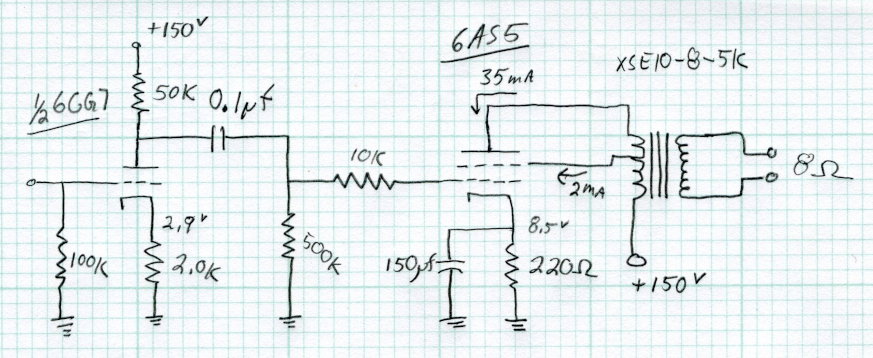
The amp uses a very straight forward design. The small base 6AS5 tubes are self biased at about 8.5v and run in UL mode with about 150v on the transformer. The driver is a 6CG7/6FG7 (a small base version of 6SN7) with a 50kΩ plate load biased at a little under 3v. Here is the schematic.
The Build
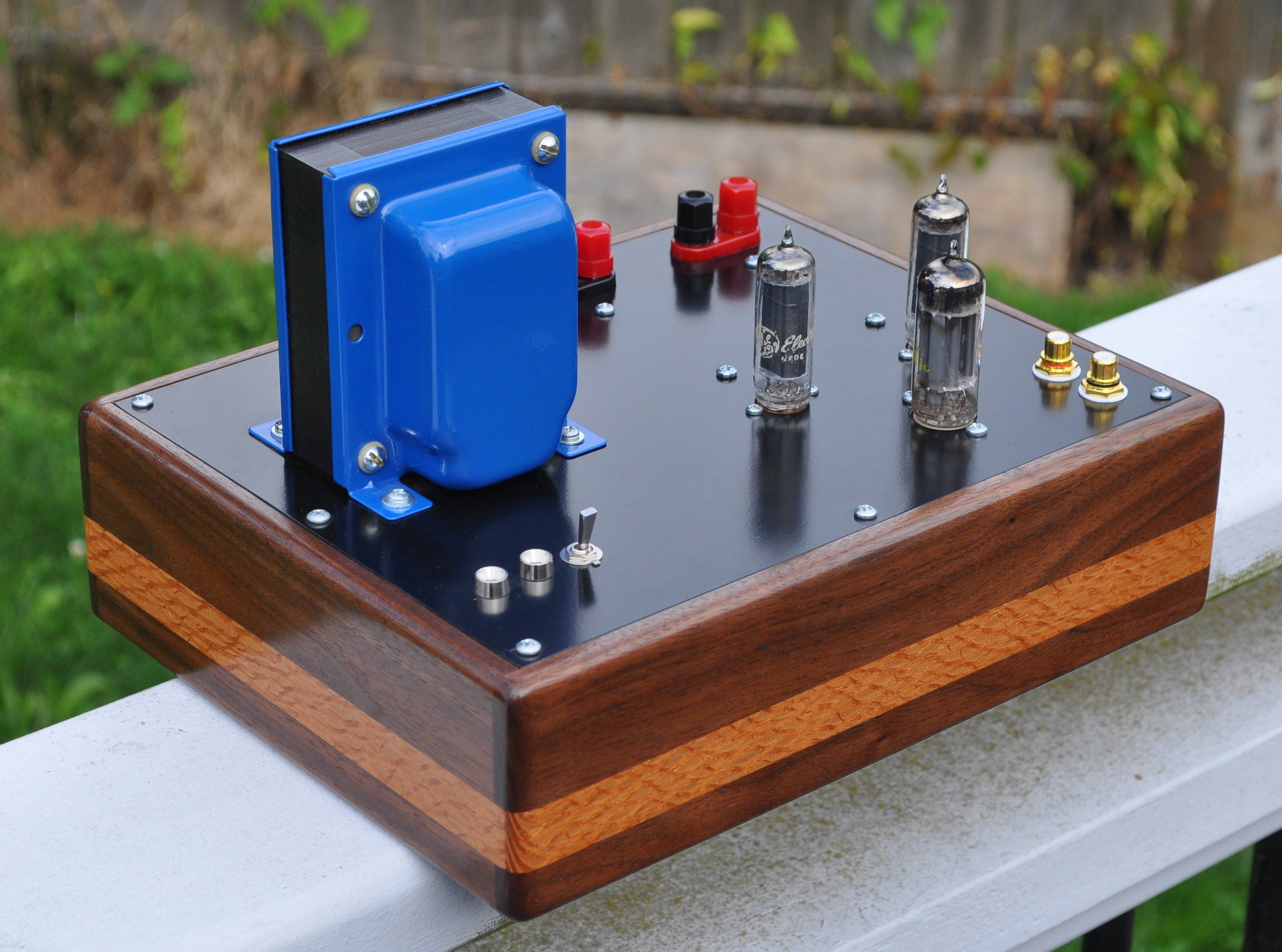
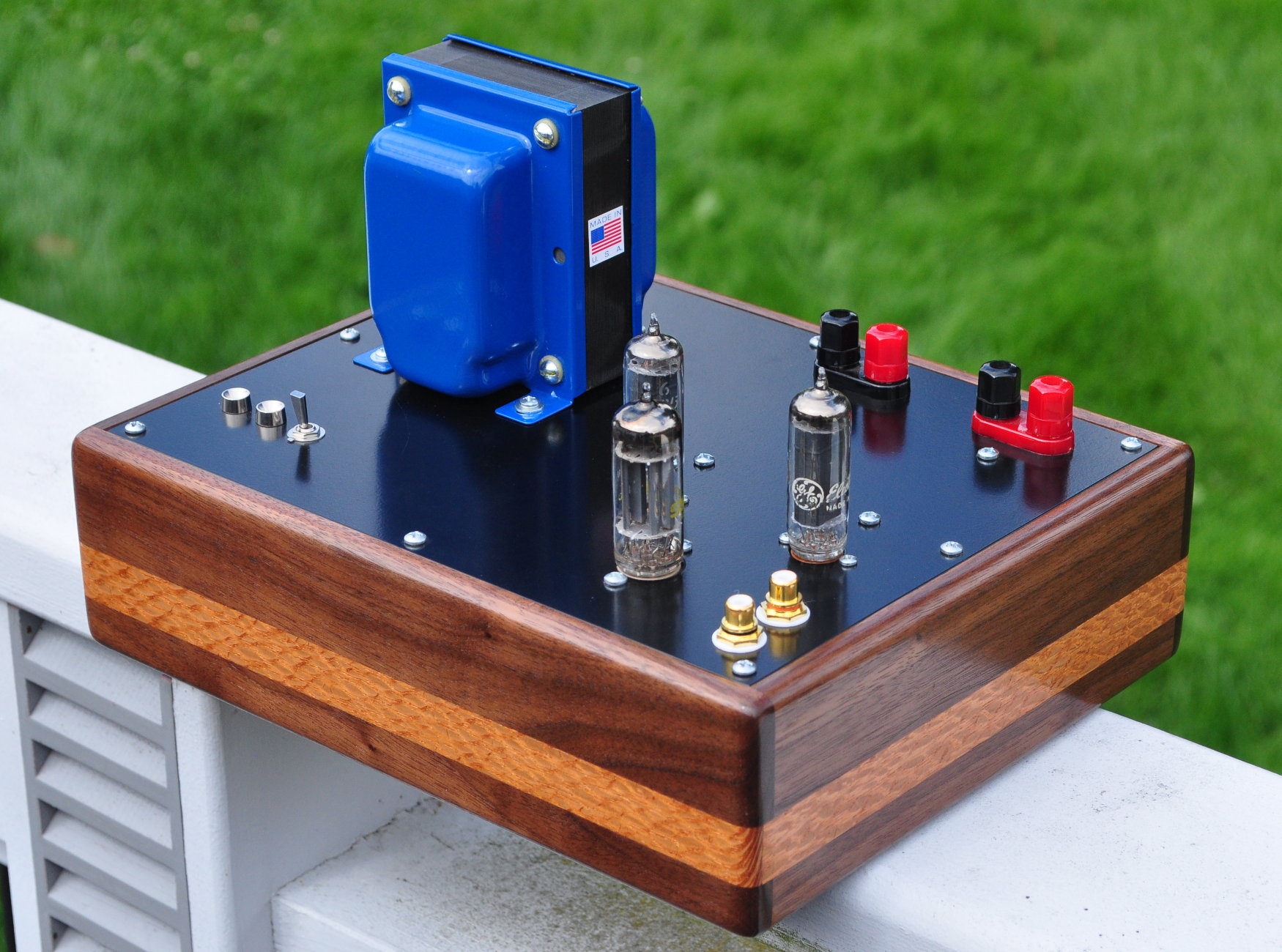
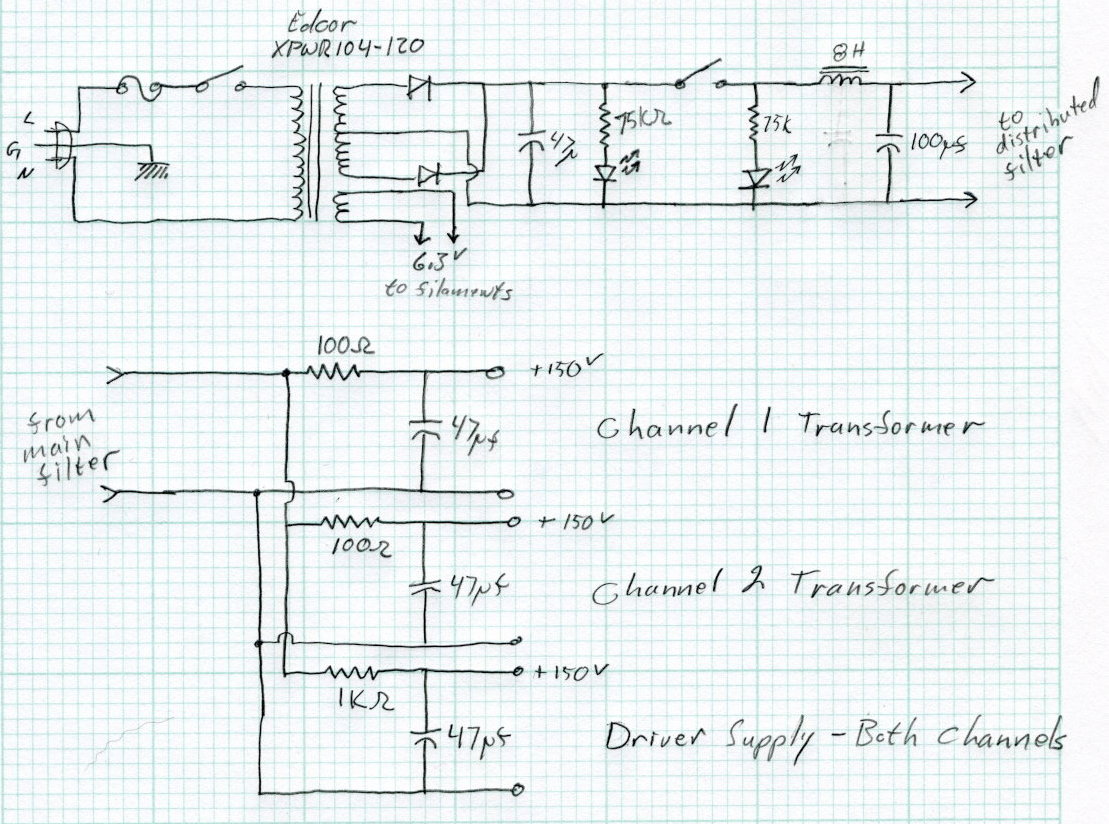
Now, looking at the two schematics and the picture of the amp, something quickly becomes apparent. This amp has a lot of stuff crammed in a very small chassis. Here is the way I handled the situation.
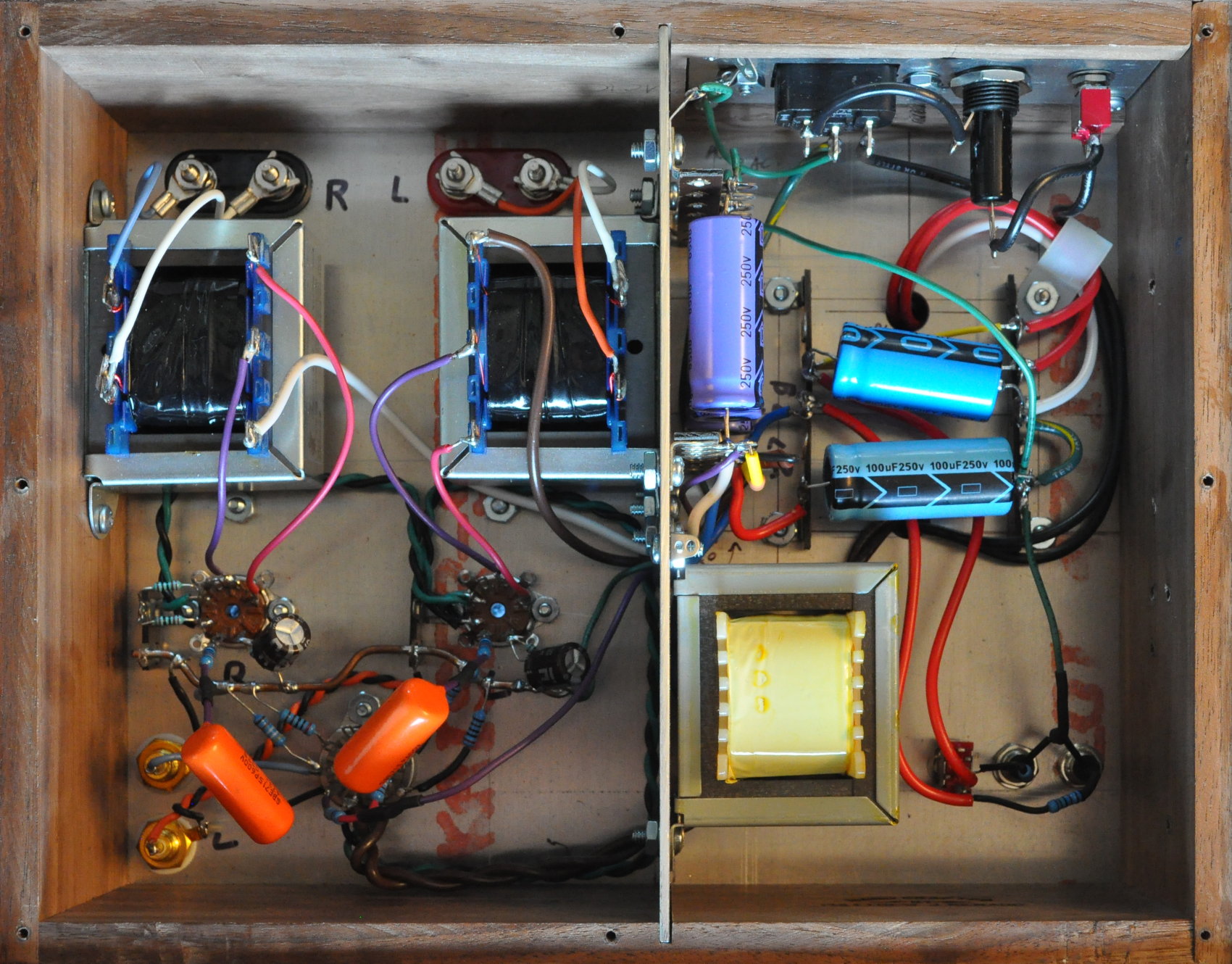
Also note that due to the use of solid state rectification, I included a stand-by switch. The main power switch is on the back next to the fuse and power cord. When on, this lights the green LED on the top of the amp. The stand by switch is on top of the amp in front of the power transformer. When high power is supplied via this switch, the red LED lights. This allows me to let the tubes heat up prior to slapping the plates with high voltage and also gives a clear indication of the amp’s power state.
Here is a shot of the amp when under test.
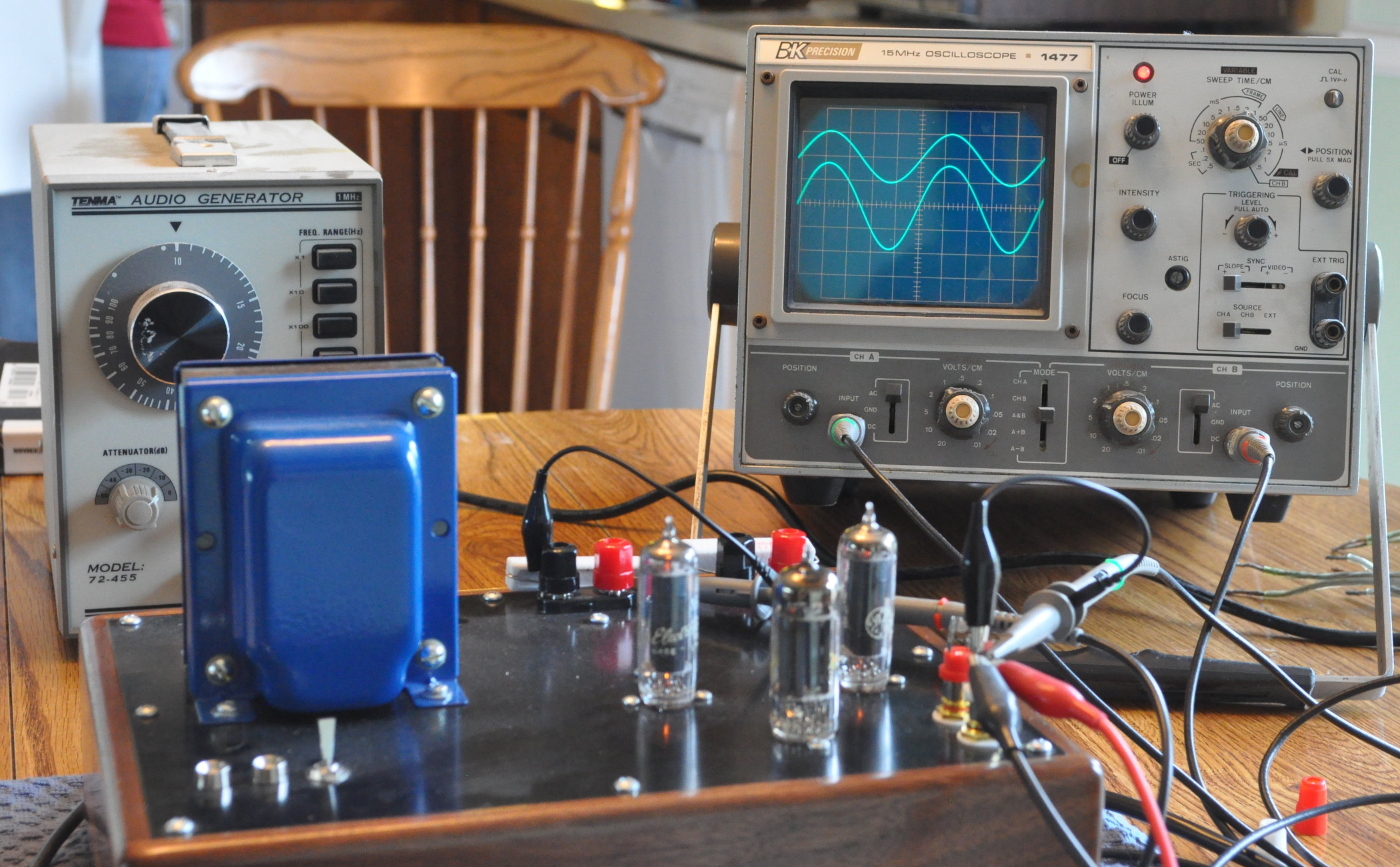
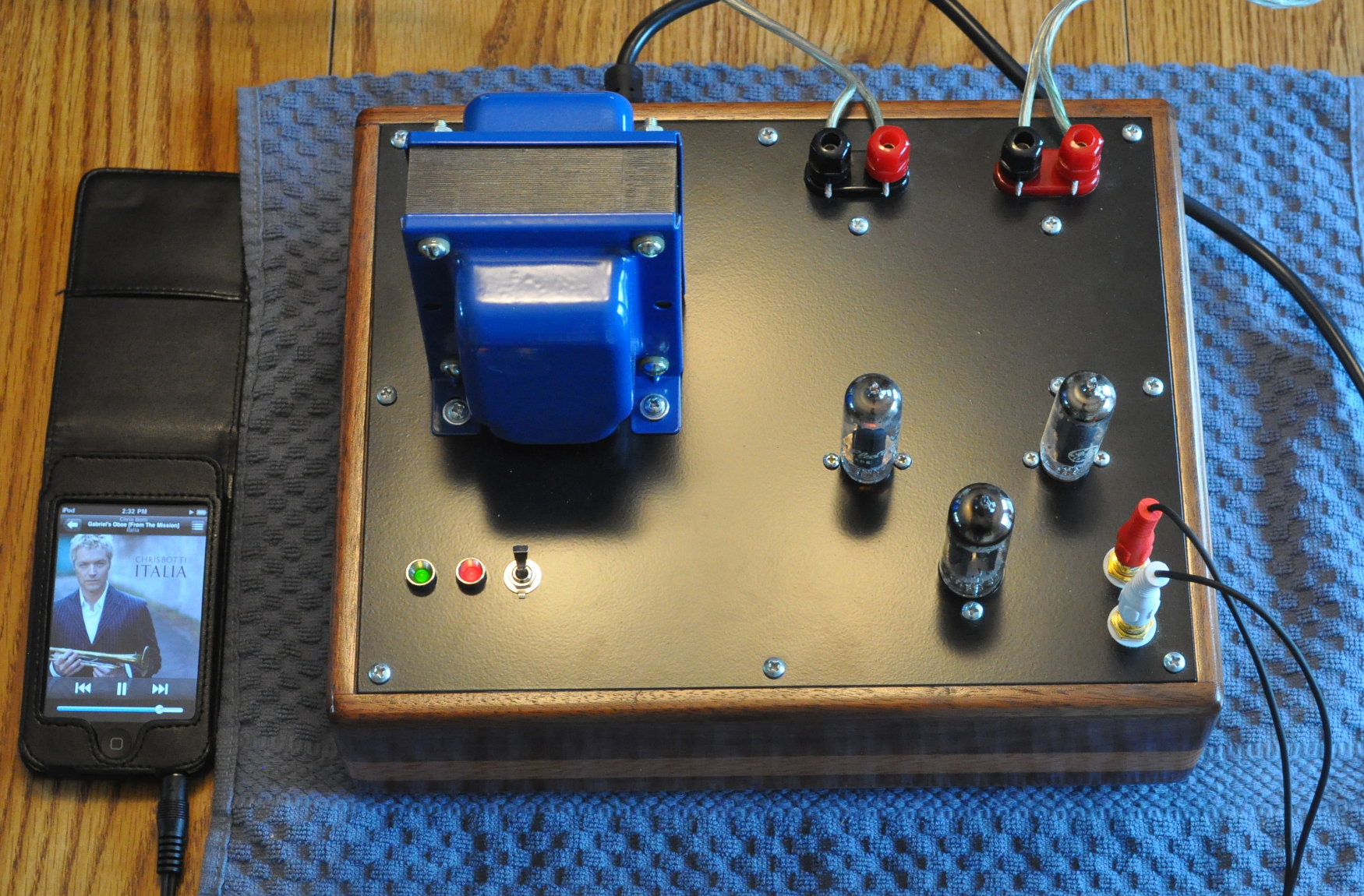
It’s feeding resistive loads instead of speakers but you can see from the scope that the output is fairly clean. Shortly after I took this shot (everything checked out fine) I fired up the amp with it’s first real music. Here is the amp playing “Gabriel’s Oboe” from Chris Botti’s album “Italia”(driven quite nicely by an iPod Touch).
The Results
The question here is about how to sum up this build. This amp has a very interesting look. The chassis is American dark walnut with an inlaid band of Australian Lacewood all toped with an oil finish.