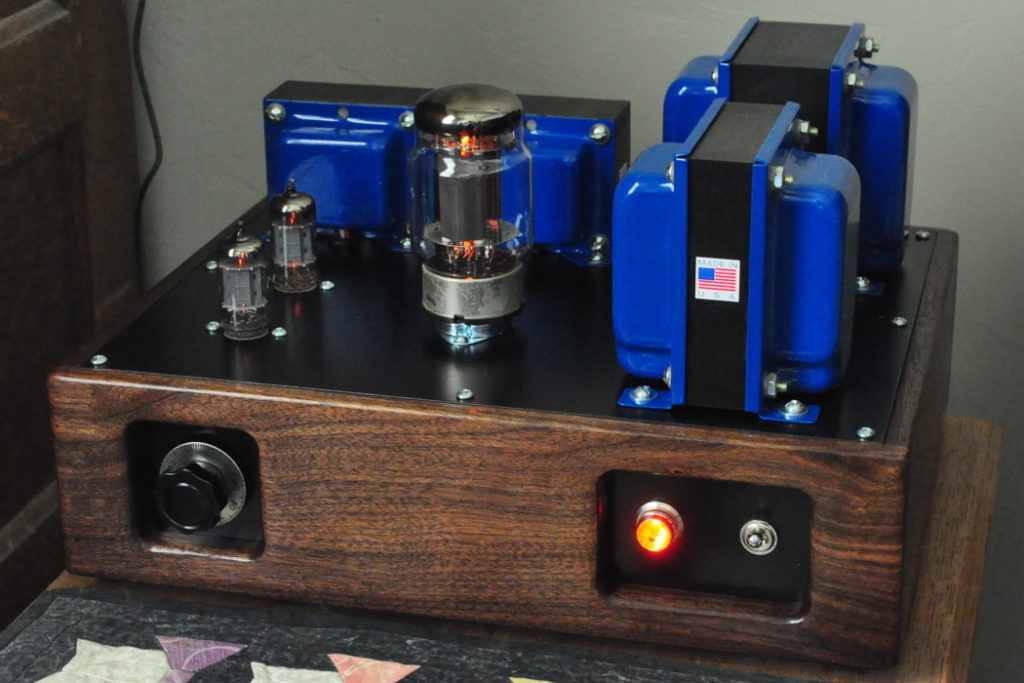
Just An Idea
So for quite some time, actually since first designing a 300B amplifier back in 2010, I have been playing with the idea of designing a nice intermediate power (5 to 10 watt per channel) SET amplifier. But I didn’t want to revisit the 300B or 2A3 DHT power triodes, I wanted something different and something that didn’t have the obvious drawbacks of the DHT tubes.
After some investigation I finally settled on a big dual pass triode, the 6336. This tube has several features that that provide distinct advantages over the old DHTs. These include:
1. Unipotential Cathode - This is probably the biggest advantage of this tube. With DHTs there are all kinds of requirements for heater circuits for high fidelity audio reproduction. The fact that the 6336 has an isolation between the cathode and the heater means the heater circuits are simple and introduce no hum into the amplifier. This is a huge benefit.
2. Dual Triode Structure - This is an additional benefit in that only a single tube is required for stereo amplification. This greatly simplifies layout and wiring. It also means only one filament supply is required. Some might argue that having both power triodes in one envelope might lower reliability. However, given that the 300B is an old design meant for usage in racks of telephone equipment, and the 6336 is a more modern design intended for hard physical mobile environments, a single 6336 should actually work out to be MORE reliable than two 300B tubes.
3. Rugged Construction - The 6336 is a ruggedly constructed tube with a hardened glass envelope, internal vibration isolators, heavy duty supports, and a modern octal base. While the old DHTs can be rather fragile in their construction, the 6336 is a heavy duty tube meant for tough use including a 720G shock requirement, a 10G low frequency vibration requirement, and a 5G high frequency vibration requirement. Additionally, the eight pin octal base is just a much better solution for large tubes than the old four pin bases used by the 300B and the 2A3. The guide pin provides significant stability not available on the older socket styles improving physical stability, long term electrical contact, and overall performance.
The Electrical Design
The first thing I did was to start performing some pencil and paper load line design work. After comparing the power and distortion characteristics for several different loads, I finally settled on a 2.5kΩ plate load in a cathode biased configuration. This resulted in the following power stage load line design.
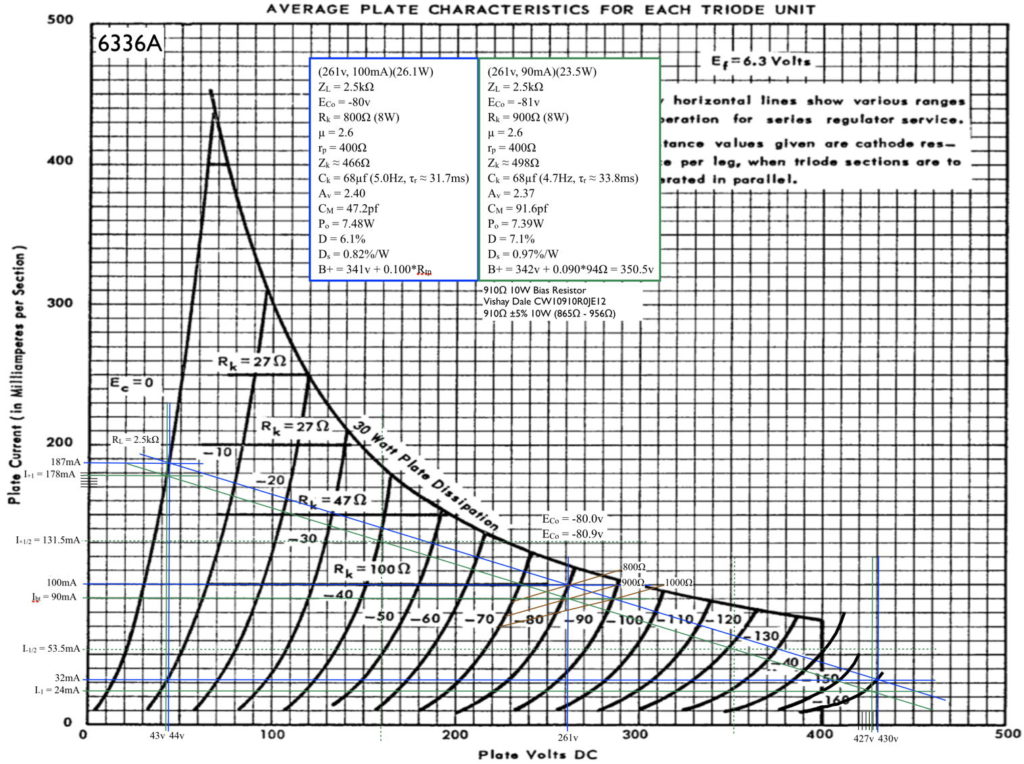
Since I didn’t have a full design I preserved two distinct design points at this stage. The tradeoff between these two being almost entirely DC load current verses peak distortion.
The next step, since I have never built with this tube and didn’t have any feel for how it behaves, was to perform some initial prototype testing. Now, there are some challenges to designing with big power triodes. Typically, these types of tubes have very low power sensitivity. This means that it takes a large swing in drive voltage to produce the output power.
In the past I have approached this problem using high gain triodes and choosing a bias point optimized for output voltage swing. These design were all predicated on using a single driver tube for the amp. For this amp I decided on a different approach. I decided that a cascaded set of low gain triodes could provide better performance. The driver I developed was a cascaded 12AU7 design discussed here (Brassboard Prototypes) and here (SET Driver Revisited). Here is the prototype driver gain response.
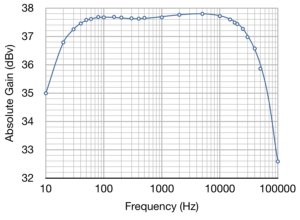
This driver has high gain, large output swing capability (over ±100v), and good distortion characteristics. So using this prototype driver, I proceeded to perform some prototyping. Here’s the prototype sitting on my bench.
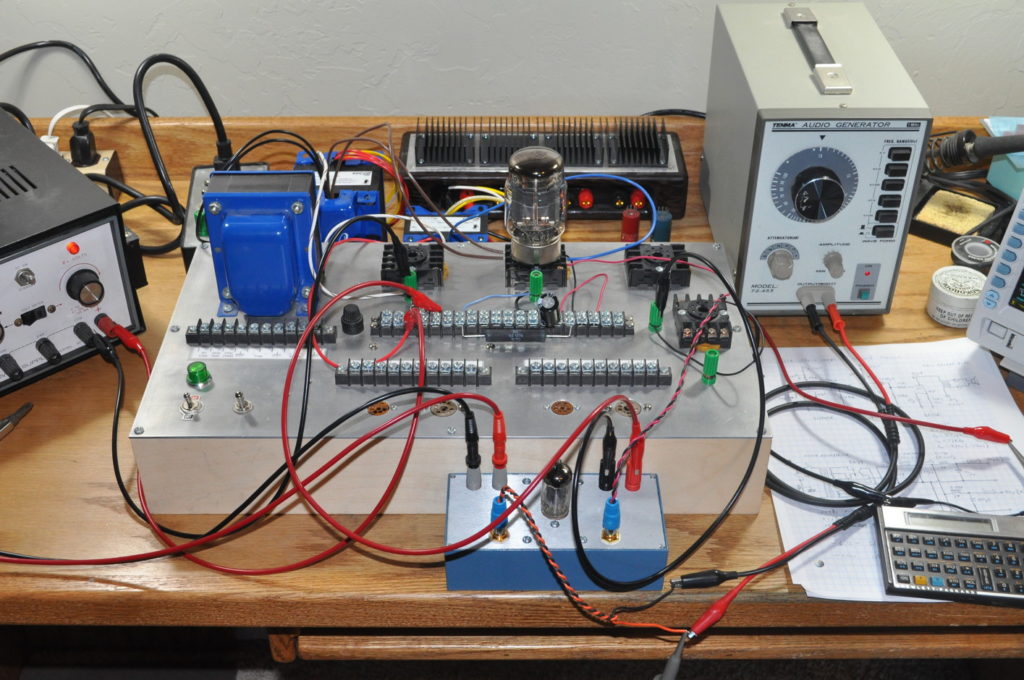
The prototype showed that I could get very clean performance up to 6.3W output and acceptable performance up to about 8W. With this information in hand, it was time to start my build.
With the prototype performance in mind I finalized the electrical design for the amp. Here is the final signal stage schematic.
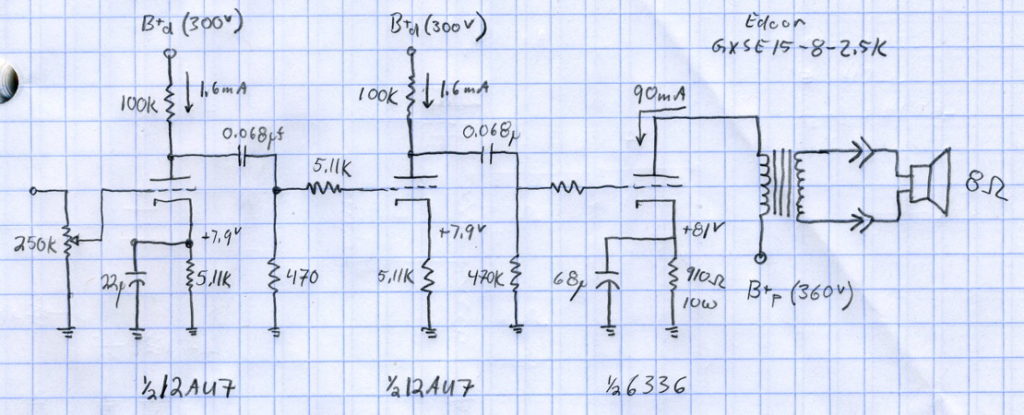
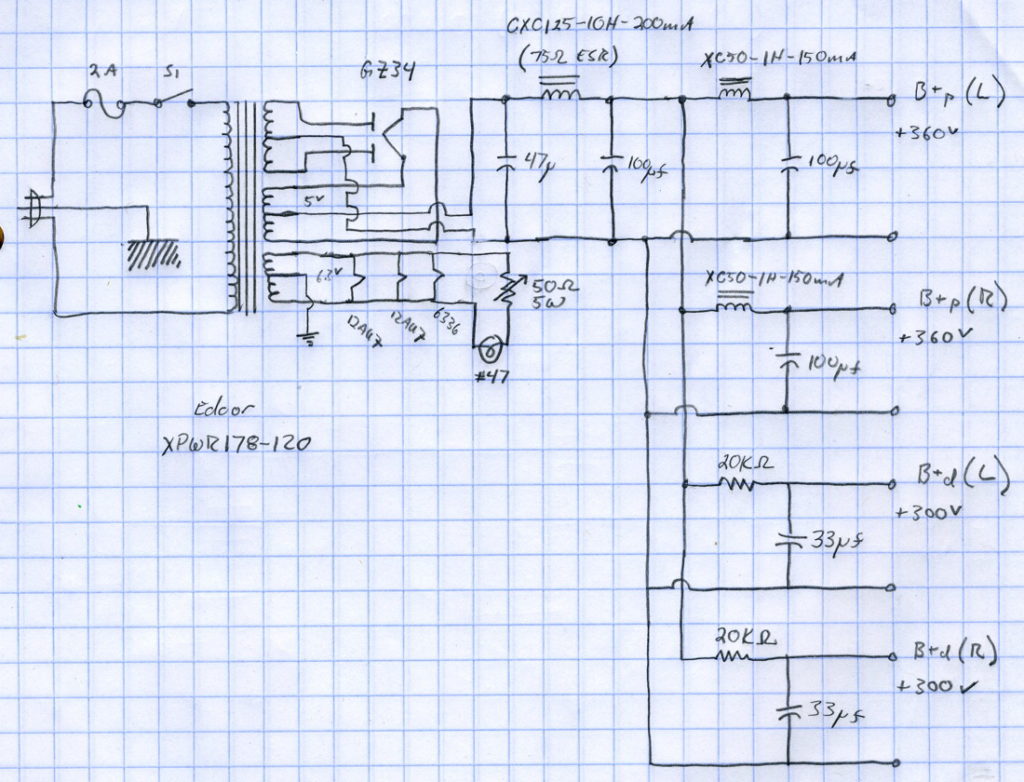
This design uses both triodes of a 12AU7 as a driver for each channel feeding a single triode in the 6336. Due to the high power stage DC current, I decided to go with a slightly larger output transformer, the Edcor GXSE15-8-2.5K. I felt that the larger core of this transformer would provide better magnetic saturation headroom than the 10W version. I managed to find an appropriate stock power transformer for this design. This was a challenge due to the massive 5.6A power draw for the signal tube filaments. I finally settled on the Edcor XPWR178-120. Here is the final power supply schematic.
I think I should mention a final design challenge with using this tube; heat. The filament load for the 6336 is 31.5W and my chosen design point dissipates 23.5W in each plate. This puts the total heat load in the the 6336 at 78.5W. This is actually a quite significant heat load to be concentrated in one tube. Now the tube itself is designed to handle this without issue, but it gets fairly warm. In my design the 6336 has a steady state tube surface temperature of about 274°F (135°C). This is not an amplifier which should be placed where small children or curious pets roam.
The Build
With the electrical design settled it was time to do some physical layout. For the physical design, I wanted a look that hinted at the old tube equipment from the 1930s and 1940s. The design elements include dark walnut for the chassis, black metal plates, an old numbered radio knob for volume control, a jeweled power indicator, and an old style toggle switch.
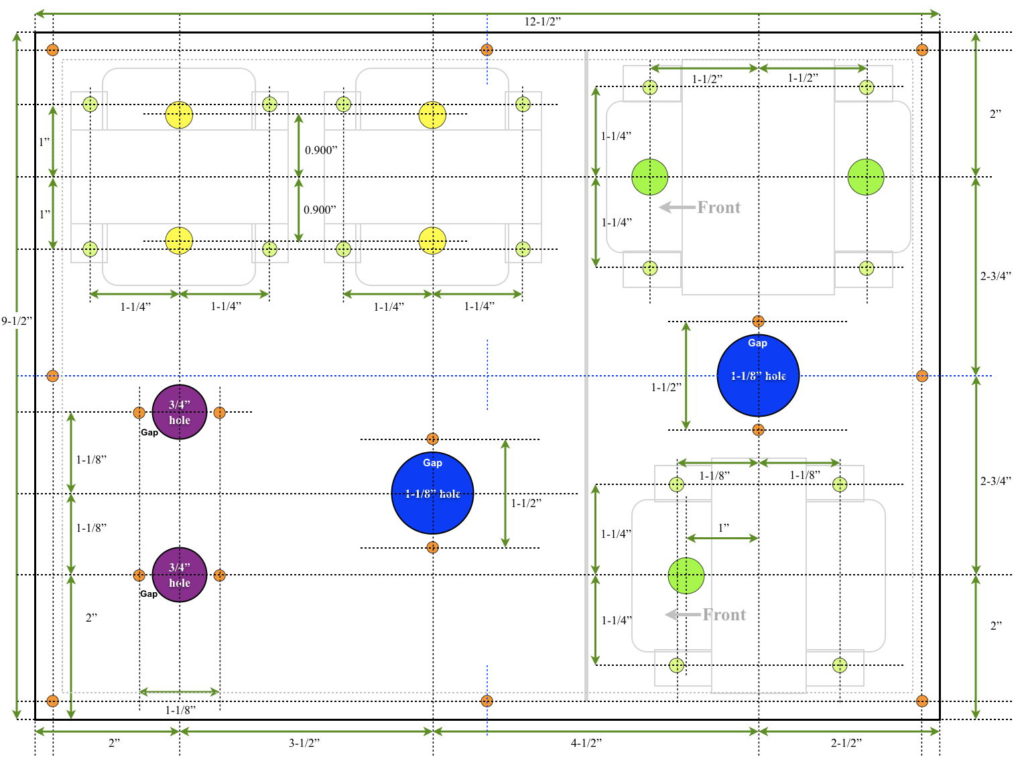
The layout for the top plate is fairly compact. Here is the layout drawing showing all the positions of the components on the top plate.
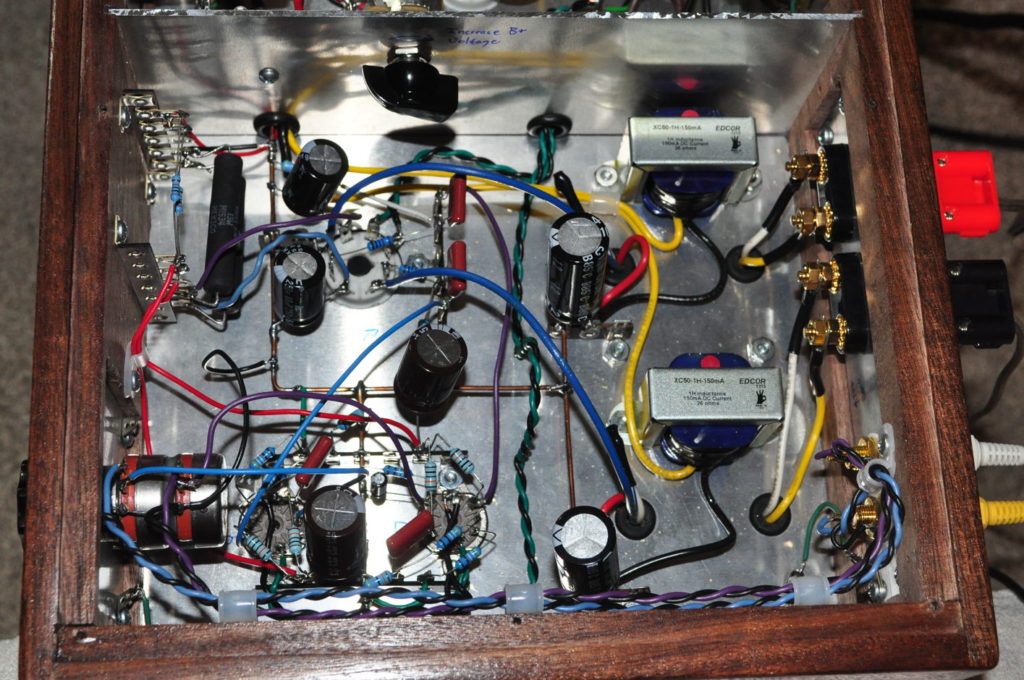
Overall the design came together nicely. The internal layout is not too cramped despite the amount of circuitry under the plate. Here’s a look at it.
Here are photos of the assembled amp from the front and rear sitting on my work table.
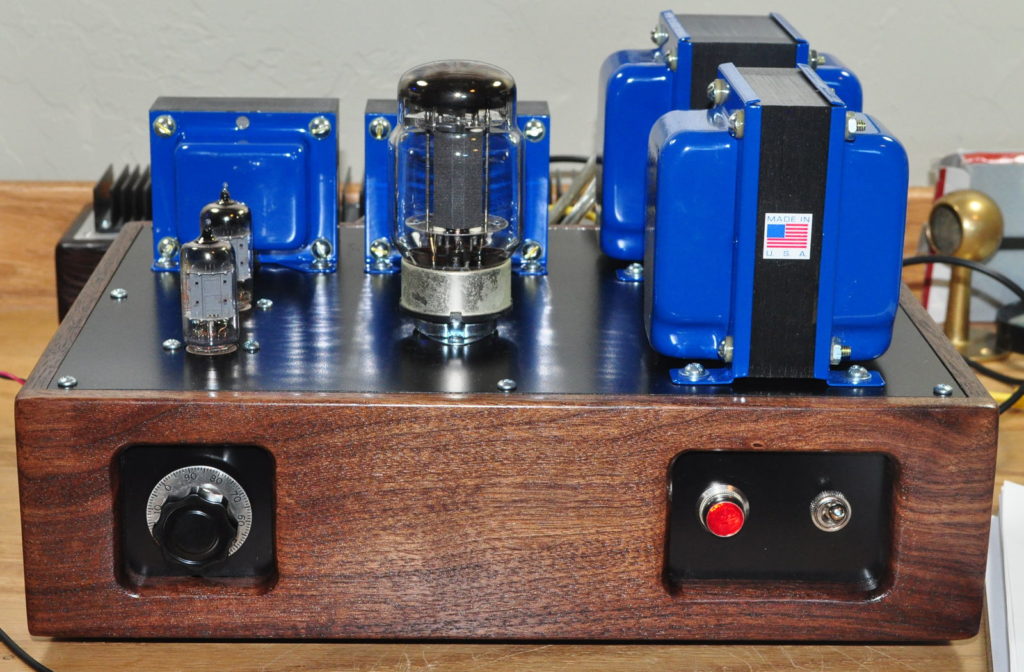
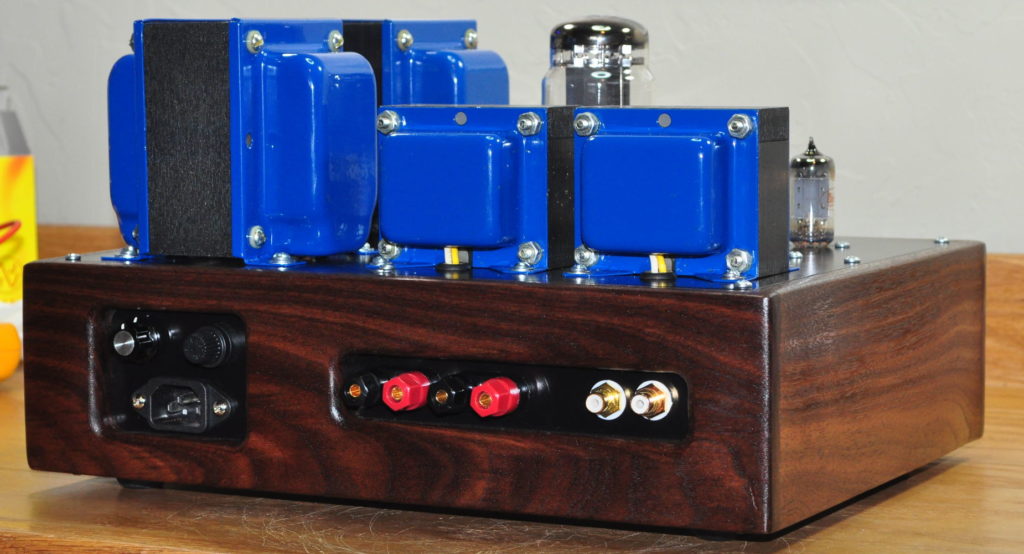
The overall look of the amplifier is spot on. The dark walnut and front panel controls give it just the “old time” appearance for which I was looking.
The Testing
Here is the end to end gain of this amplifier.
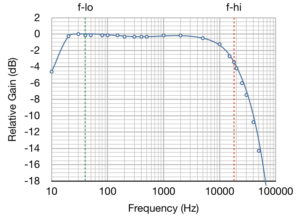
The very good low end performance is due to a combination of, the 22µf bypass capacitor on the first stage of the driver, the 0.086µf coupling capacitors, the very low output impedance of the 6336, and the healthy input impedance of the 15W transformer.
The high end roll off seen here is due to the very large (10kΩ) grid stopper resistor used on the 6336 triode. The response is only down about 3.9dB at 20kHz but someone with very good high frequency hearing might notice a falloff. This was used due to some initial concerns about the stability of the overall signal chain. However, after testing, I am confident that the grid stopper could be reduced to just a few kΩ which would restore the full top end response out beyond 20KHz.
Impressions
This is a big powerful SET amplifier. It is warm, detailed, fast, and has an excellent sound stage. The Beast has handled just about every type of music I’ve thrown at it with ease. Jazz, rock, opera, classical, choral all really come through with incredible detail and staging.
But the amp seems to truly excel at big classical scores and choral music. many amp have trouble with this type of music and become muddled; but not this one. The complex nature of these scores really lend them selves to an all triode signal chain. And The Beast does not disappoint!
This is a great project. It really delivers big powerful sound without losing the detail and quickness of the little triode SETs. If you’re looking for a somewhat more challenging project, I highly recommend this one. I think you’ll really like it.
A Note On Using Regulator Pass Tubes (Added 19 June 2026)
At the end of the 6AS7 “Purpleheart” project page I added a note about using pass tubes in audio amplifiers. Anyone contemplating this amplifier should read that note.
The basic message is that pass regulators like the 6336, 6AS7/6080, 6528, or even the little 6877, are not designed for audio. They are designed for operation in power regulators incorporating error amplifiers and feedback control of the pass element. Because of this the standards to which the operational parameters are held are much more lax. There can be a lot of variability between tubes and even between elements in a single tube because the error amplifier will correct the errors and the power supply will function acceptably.
However, when used in a simple zero feedback circuit, like this one, all that variability becomes evident. Anyone pursuing using these tubes as audio amplifiers needs to be prepared for finding tubes which work well and, in the case of dual triodes, are reasonably similar. At the current price of 6336 tubes, this could represent a significant investment.